
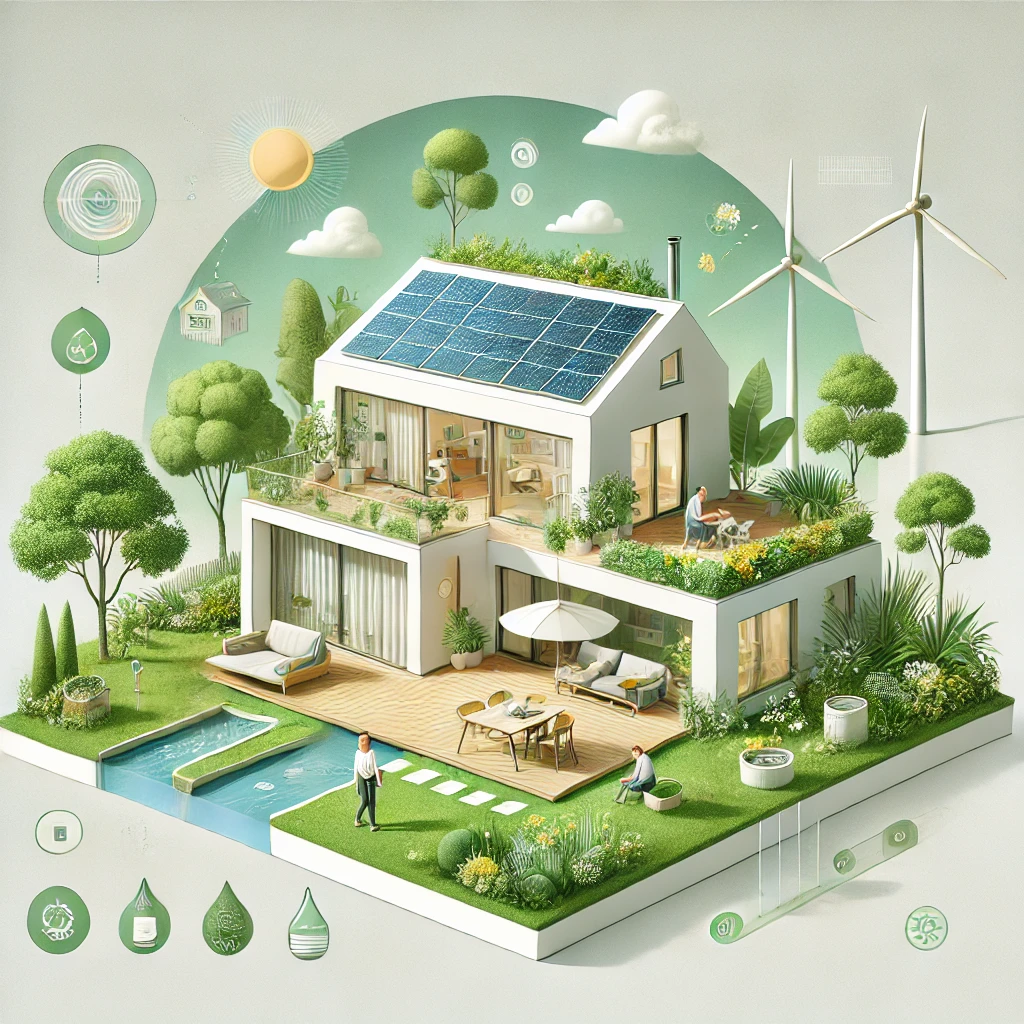
A sustainable home, often referred to as an eco-friendly or green home, is one designed to have minimal negative impacts on the environment while providing a healthy and comfortable living space for its inhabitants. Such a home integrates a variety of principles, practices, and technologies that collectively help reduce its ecological footprint. Let's delve into the key characteristics and components that define a sustainable home.
1. Energy Efficiency
A primary feature of sustainable homes is their emphasis on energy efficiency. They often incorporate:
Insulation: Proper insulation in walls, ceilings, and floors keeps a home warm during winter and cool during summer, reducing the need for artificial heating or cooling.
Energy-efficient appliances: These consume less electricity while providing the same or better functionality compared to their traditional counterparts.
Natural lighting: Large windows, skylights, and open floor plans allow sunlight to flood the home, reducing dependence on artificial lighting during daylight hours.
2. Sustainable Materials
Using sustainable, recycled, or upcycled materials is another hallmark of a sustainable home. For instance:
Reclaimed wood: Old wood from barns, factories, and warehouses can be used for flooring, beams, and furniture.
Bamboo: As a rapidly renewable resource, bamboo is a preferred material for flooring and cabinetry.
Recycled metal and glass: These can be repurposed for various household applications, from countertops to fixtures.
3. Water Conservation
Water is a precious resource, and sustainable homes are designed to use it judiciously. Features like:
Rainwater harvesting systems: These collect rainwater for non-potable uses such as flushing toilets or watering plants.
Greywater systems: Used water from showers and sinks is treated and reused for watering gardens or flushing.
Low-flow fixtures: These reduce the amount of water used in showers, taps, and toilets without compromising performance.
4. Indoor Air Quality
Sustainable homes prioritize the health and well-being of their occupants. To ensure clean indoor air:
Ventilation: Effective ventilation systems bring in fresh air and expel stale air, reducing indoor pollutants.
Non-toxic materials: By using paints, finishes, and materials that don't emit harmful chemicals, sustainable homes promote better air quality.
5. Sustainable Landscaping
The surroundings of a home also play a role in its sustainability. Sustainable homes often feature:
Native plants: These require less water and care since they're adapted to the local environment.
Permeable paving: This allows rainwater to seep into the ground, replenishing groundwater and preventing runoff.
Conclusion
A sustainable home is more than just an eco-friendly structure; it represents a holistic approach to living harmoniously with the environment. By incorporating practices that respect and protect our natural resources, such homes not only reduce the strain on the environment but also offer a healthier, more efficient, and often more economical living space for their inhabitants.